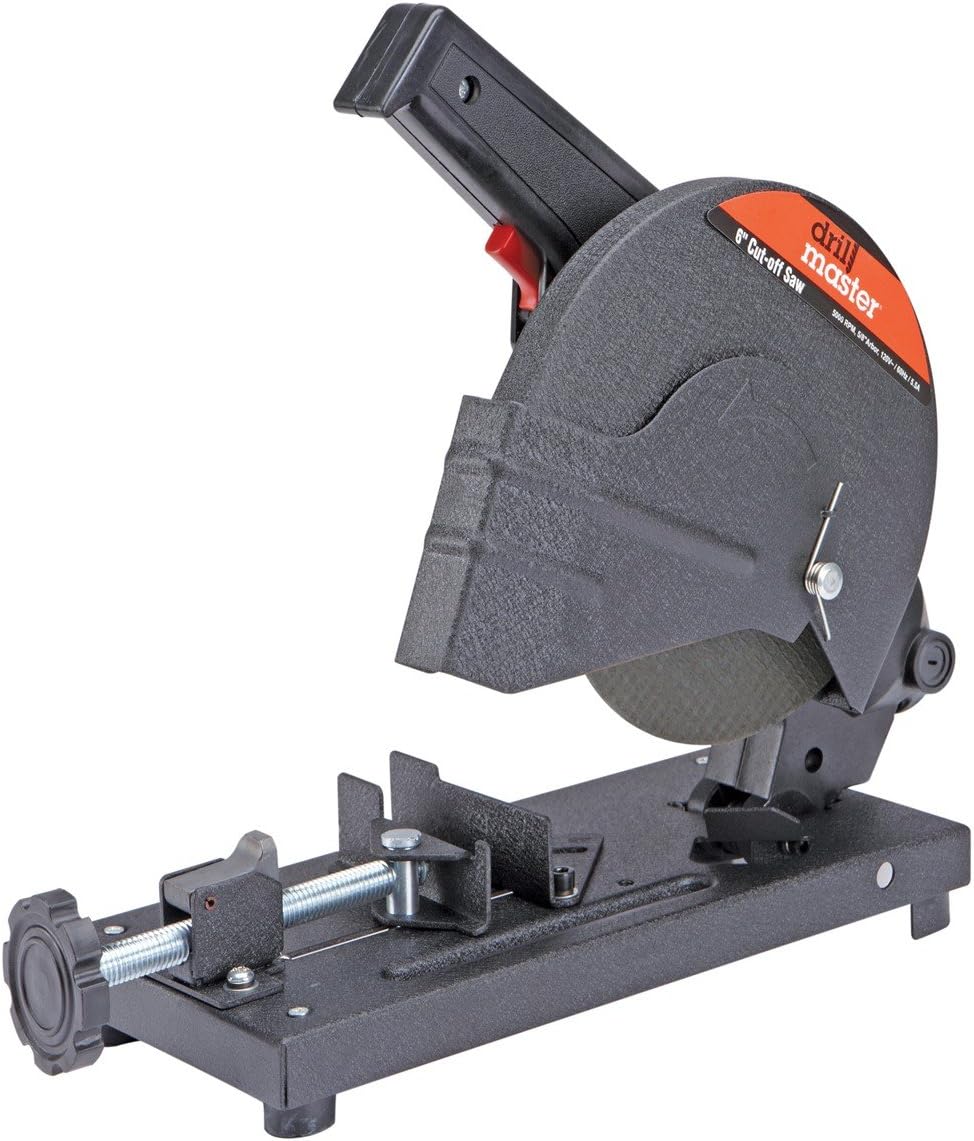
Drill master 6 inch Cut-Off Saw
- Drill master 6 inch Cut-Off Saw
- Cut-Off Saw
- Easy-to-replace carbon brushes
- Blade guard deflects sparks
- Fence adjusts for 0-45 degree miter cuts
$47.99
Transforming Your Workshop One Cut at a Time
When I first ventured into the world of DIY projects, I quickly learned that having the right tools can make or break your experience. Among the arsenal of power tools I’ve collected over the years, the Drill Master 6″ Cut Off Saw has earned its permanent spot in my workshop. This compact powerhouse has helped me tackle countless projects, from basic metal cutting tasks to intricate crafting endeavors. Today, I’m sharing my comprehensive experience with this versatile tool to help you decide if it deserves a place in your toolkit too.
My Journey with the Drill Master 6″ Cut Off Saw
I still remember the day I brought home my first Drill Master 6″ Cut Off Saw. I was working on restoring an old wrought iron garden bench, and the rusted bolts needed precise cutting. After spending hours with a hacksaw and ending up with blistered hands, I knew I needed something more efficient. That’s when I discovered this affordable gem at Harbor Freight.
The Drill Master 6″ Cut Off Saw isn’t just a tool—it’s a game-changer for anyone serious about metalworking and DIY projects. After three years of regular use, I’m convinced it offers exceptional value for its modest price point. But is it the right choice for your specific needs? Let’s dive deeper into everything you need to know about this practical power tool.
Understanding the Drill Master 6″ Cut Off Saw
What Exactly Is This Tool?
The Drill Master 6″ Cut Off Saw is essentially a benchtop cutting tool designed primarily for metal cutting applications. Think of it as a specialized circular saw that remains stationary while you bring the material to it. Its compact design features a 6-inch abrasive cutting wheel that spins at high speeds to slice through various materials.
Unlike its larger cousins (miter saws or table saws), this tool is purpose-built for cutting metal stock, pipes, rods, and similar materials. Its design prioritizes precision cutting of smaller workpieces rather than handling large lumber or construction materials.
How Does It Work?
The operational principle is straightforward yet effective. The saw features a powerful motor that spins an abrasive cutting disc at approximately 3,450 RPM (revolutions per minute). The tool is anchored to a stable base, with a vise mechanism that securely holds your workpiece in place.
When you power on the saw, the abrasive wheel rotates at high speed. You then gradually lower the cutting head using the ergonomic handle, allowing the spinning disc to make contact with your material. The abrasive action gradually cuts through the workpiece with minimal heat transfer compared to other cutting methods.
What I particularly appreciate is the adjustable fence and vise system. This allows for cutting materials at various angles (up to 45 degrees), making it versatile for more complex projects that require angled cuts. The spark deflector shield provides essential protection while maintaining visibility of your cutting line.
Specifications and Technical Details
Understanding the technical aspects of any power tool helps set appropriate expectations for its performance. Here’s what you should know about the Drill Master 6″ Cut Off Saw:
- Motor Power: 5.5 Amp motor (120V, 60Hz)
- No-Load Speed: 3,450 RPM
- Blade Size: 6″ diameter with 7/8″ arbor
- Cutting Capacity: 2″ at 90°, 1-1/2″ at 45°
- Weight: Approximately 15 pounds
- Dimensions: 13″ x 6-1/2″ x 6-1/4″
- Miter Capacity: 0-45 degrees
- Warranty: 90-day limited warranty
The relatively lightweight design (compared to professional-grade models) makes it portable enough to move around your workshop as needed, yet sturdy enough to remain stable during operation. I’ve found the build quality surprisingly robust considering its budget-friendly price point.
Material Compatibility: What Can You Cut?
One of the first questions I had when purchasing this saw was about material compatibility. After extensive testing, I can confirm the Drill Master 6″ Cut Off Saw effectively cuts:
Metals:
- Steel rods and bars (up to 2″ diameter)
- Angle iron
- Metal tubing and pipes
- Rebar
- Mild steel stock
- Aluminum (with appropriate blade)
- Brass and copper (with reduced feed rate)
Other Materials (with appropriate blades):
- PVC pipes
- Conduit
- Some plastic materials
It’s important to note that while the saw comes with a general-purpose metal cutting blade, specialized cutting discs can extend its versatility. For instance, I’ve successfully cut aluminum using a non-ferrous metal blade with excellent results.
What surprised me most was its ability to make clean cuts through square tubing for a furniture project I was working on. The cuts were precise enough that I barely needed any filing before welding the pieces together.
What About Wood and Tile?
Here’s where I need to be clear: while technically possible with specialized blades, cutting wood or tile with this saw is not recommended. The Drill Master 6″ Cut Off Saw lacks the dust collection system needed for these materials, and the high-speed abrasive cutting action can create safety hazards with wood (potential for burning) and tile (dangerous dust and unpredictable breaks).
For wood cutting, you’re better served by a proper miter saw, and for tile, a dedicated tile saw with water cooling will provide superior results. I learned this lesson the hard way when I attempted to cut a small piece of hardwood and nearly started a fire in my shop due to the heat generated.
Cost Considerations: Is It Worth the Investment?
One of the most compelling aspects of the Drill Master 6″ Cut Off Saw is its affordability. Typically priced between $40-$60 (as of my last purchase), it represents one of the most economical entry points into powered metal cutting tools.
This price point positions it significantly below comparable tools from premium brands, which often start at $100 and can reach $300+ for professional-grade models. But does the lower price mean compromised quality?
After three years of regular use, I can confidently say this tool offers exceptional value. While it doesn’t have all the refinements of more expensive models (like tool-free blade changes or integrated work lights), it handles its core function—cutting metal—remarkably well.
For occasional DIYers or those just starting their tool collection, the cost-to-performance ratio is outstanding. I’ve completed dozens of projects that would have been extraordinarily difficult without this saw, making it one of my best tool investments in terms of dollars-per-use.
Where to Purchase
The Drill Master 6″ Cut Off Saw is primarily available through Harbor Freight Tools, both in their physical stores and through their online shop. I’ve occasionally spotted them on online marketplaces like eBay and Amazon, though often at marked-up prices.
If you’re planning to purchase one, I recommend:
- Watching for Harbor Freight sales and coupons (they frequently offer 20-25% discounts)
- Checking the physical store if possible to inspect the specific unit
- Considering their extended protection plan if you anticipate heavy usage
My personal strategy was to use one of Harbor Freight’s famous coupon deals, bringing the price down to around $42—an absolute steal for the functionality it provides.
User Experience: What’s It Like to Operate?
Setup and First Use
Out of the box, the Drill Master requires minimal assembly. The main components arrive pre-assembled, with only the safety guard and spark deflector needing installation. The included manual provides adequate instructions, though I found several online videos that offered more detailed guidance for first-time users.
The initial setup took me approximately 15 minutes, including adjusting the fence to ensure square cuts. The tool comes with a basic wrench for blade changes and adjustments, though I recommend having your own hex keys and wrenches on hand for more precise adjustments.
Ergonomics and Control
The handle provides decent grip comfort for extended use, though I eventually added a small rubber grip cover to improve ergonomics during longer cutting sessions. The trigger mechanism is basic but functional, with a safety lock to prevent accidental activation.
What impressed me was the stability of the base during operation. Despite its relatively lightweight construction, the rubber feet help minimize vibration, and the tool stays firmly planted on my workbench even when cutting tougher materials.
The vise mechanism, while simple, effectively secures most materials. For odd-shaped pieces, I’ve found adding small wooden blocks can help achieve a more secure grip. The adjustable fence allows for accurate repetitive cuts, though I recommend double-checking measurements for precision work.
Noise and Dust Production
Let’s be honest—this is not a quiet tool. The high-speed motor combined with the metal-on-metal cutting action produces significant noise. Hearing protection is absolutely essential when operating this saw.
As for dust and debris, the sparks generated during metal cutting are substantial. The included spark deflector helps direct them downward, but I strongly recommend:
- Clearing your work area of any flammable materials
- Wearing appropriate eye protection and clothing
- Having a fire extinguisher readily available
I’ve made it a habit to place a metal tray beneath the cutting area to catch hot metal fragments, which has prevented several potential workshop mishaps.
Performance Review: How Well Does It Cut?
After extensive use across numerous projects, I’ve developed a nuanced understanding of this tool’s capabilities and limitations.
Cutting Capacity and Precision
For a compact saw, the 2-inch maximum cutting capacity at 90 degrees is impressive. I’ve successfully cut through 1.5-inch steel pipe, 1-inch square tubing, and various metal rods without issue. The adjustable vise makes securing these materials straightforward, though wider materials sometimes require creative positioning.
In terms of precision, the Drill Master performs admirably for its price point. When properly set up and with a fresh cutting disc, I’ve achieved cuts with accuracy within 1/16 of an inch—more than adequate for most DIY projects and even some professional applications.
The ability to make angled cuts up to 45 degrees has proven invaluable for creating custom brackets and furniture components. The miter adjustment is basic but functional, though it requires careful tightening to prevent shifting during cutting.
Cutting Speed and Efficiency
The 5.5-amp motor provides sufficient power for most hobbyist applications. When cutting mild steel up to 1/2 inch thick, the saw progresses through the material at a reasonable pace without bogging down. Thicker materials require a slower approach, allowing the abrasive disc to work gradually through the stock.
I’ve found that letting the saw do the work (rather than forcing the cutting head down) produces the cleanest cuts and extends blade life. The motor has adequate cooling for typical DIY use patterns, though I recommend allowing it to rest after several continuous minutes of operation, especially when cutting thicker materials.
Blade Life and Replacement
The standard abrasive cutting disc included with the saw is adequate for immediate use but represents the most significant ongoing cost of operating this tool. With regular use on steel stock, I typically replace the cutting disc every 15-20 hours of actual cutting time.
Replacement discs are readily available and relatively inexpensive (around $3-5 each). I’ve had good results with both Harbor Freight’s own brand and aftermarket options from hardware stores. For specialized materials like aluminum, investing in appropriate non-ferrous cutting discs is worthwhile for better results and safety.
Changing the blade is straightforward using the included wrench, though wearing gloves during this process is advisable as the edges of used discs can be quite sharp. The arbor size (7/8 inch) is standard, making compatible replacement discs widely available.
Safety Considerations: Using the Saw Responsibly
Power tools demand respect, and the Drill Master 6″ Cut Off Saw is no exception. Throughout my years of using this tool, I’ve developed specific safety protocols that I consider non-negotiable:
Essential Safety Gear
When operating this saw, I always wear:
- Impact-resistant safety glasses or a full face shield
- Hearing protection (the noise level exceeds 90dB)
- Heavy-duty work gloves
- Non-flammable clothing (no synthetic materials that can melt if sparks land on them)
- Closed-toe shoes
This protective gear has saved me from injury on multiple occasions, particularly when unexpected blade fragmentation occurred during a challenging cut.
Workspace Preparation
Before powering up the saw, I ensure:
- The work area is clear of flammable materials (papers, rags, solvents)
- The saw is firmly secured to a stable worksurface
- Adequate lighting illuminates the cutting area
- A fire extinguisher is within reach
- The workspace has proper ventilation (metal cutting produces fumes)
- No one else is standing in the direct path of potential spark projection
I once neglected to clear my workbench completely and had a spark land on a rag soaked with linseed oil—a close call that reinforced the importance of proper preparation.
Operation Best Practices
During operation, I follow these guidelines:
- Allow the blade to reach full speed before initiating contact with the material
- Apply steady, consistent pressure rather than forcing the cut
- Position materials securely in the vise, with minimal overhang
- Never attempt to cut materials that aren’t fully secured
- Maintain awareness of hand placement, keeping at least 6 inches from the cutting wheel
- Never remove the safety guard or spark deflector
- Turn off and unplug the saw when changing blades or making adjustments
These practices have become second nature, but I still mentally review them before each use. Safety isn’t about limiting creativity—it’s about ensuring you’ll be around for your next project.
Maintenance Tips for Longevity
With proper care, the Drill Master 6″ Cut Off Saw can provide years of reliable service. My maintenance routine includes:
Regular Cleaning
After each use, I thoroughly clean the tool using:
- Compressed air to blow out metal dust from motor vents and moving parts
- A stiff brush to clean the vise mechanism and adjustment points
- A shop vacuum to remove accumulated metal fragments from the base
- Light machine oil applied to moving parts (sparingly to avoid attracting dust)
This cleaning regimen takes just 5 minutes but has prevented premature wear and preserved the tool’s functionality.
Periodic Checks and Adjustments
Every few months, I perform a more thorough maintenance check:
- Inspect the power cord for any damage or fraying
- Check and tighten all fasteners and adjustment points
- Verify the fence alignment for square cuts
- Inspect the brush condition (accessible via the motor housing)
- Test the safety features and guard operation
- Lubricate the pivot points with a drop of medium-weight machine oil
During one such inspection, I discovered a loose mounting bolt that was causing slight vibration—addressing it immediately prevented potential misalignment and motor strain.
Storage Considerations
When not in use, I store the saw:
- In a dry environment to prevent rust
- With a light coat of tool protectant on metal surfaces
- With the cutting head secured in the down position
- Covered with a shop towel to prevent dust accumulation
Proper storage has prevented the common issues of rust and seized adjustment mechanisms that often plague workshop tools.
Common Issues and Troubleshooting
No tool is perfect, and over the years, I’ve encountered and resolved several issues with my Drill Master 6″ Cut Off Saw:
Motor Overheating
When cutting particularly thick materials, I noticed the motor housing becoming extremely hot. The solution was implementing a “duty cycle” approach—making cuts for 2-3 minutes, then allowing the saw to cool for an equal period before continuing. This simple adjustment has prevented thermal overload and protected the motor.
Blade Wobble
After about a year of use, I noticed increased vibration and slight blade wobble. Investigation revealed:
- The arbor nut had loosened slightly
- The mounting flanges had accumulated debris
- The blade itself had worn unevenly
Thoroughly cleaning the mounting surfaces and properly retightening the arbor nut resolved the issue. I now check this connection before each use as preventative maintenance.
Vise Slippage
When cutting round stock, I occasionally experienced the material shifting during cutting. My solution was creating V-blocks from hardwood to cradle round materials, preventing rotation and ensuring more precise cuts. These simple jigs have become indispensable accessories for my cutting operations.
Trigger Stiffness
The trigger mechanism became increasingly stiff after about two years of use. A careful application of electrical contact cleaner (with the tool unplugged) followed by a tiny amount of lubricant restored smooth operation. This maintenance task requires careful attention to avoid introducing lubricant to electrical components.
Comparing to Other Cut-Off Saws: How Does It Stack Up?
Having had the opportunity to use several other cut-off saws, I can offer some perspective on how the Drill Master compares to alternatives at different price points:
Versus Budget Competitors ($40-80 range)
Compared to similar budget options like the Genesis GCO40S or Chicago Electric models, the Drill Master offers comparable performance. The primary differences I’ve noticed are:
- Slightly better build quality in the vise mechanism
- More consistent motor performance under load
- Better availability of replacement parts through Harbor Freight
Versus Mid-Range Options ($80-150 range)
When compared to mid-range models like the PORTER-CABLE PCE700 or Metabo HPT CC14SF, the Drill Master shows some limitations:
- Less powerful motors (5.5A vs. 15A in mid-range models)
- Smaller cutting capacity (2″ vs. 4″ or larger)
- Less robust construction and durability
- Fewer convenience features (quick-release vises, tool-free adjustments)
However, for occasional use and lighter materials, the performance gap isn’t as dramatic as the price difference might suggest.
Versus Professional-Grade Tools ($150+ range)
Professional models from brands like DeWalt, Makita, and Milwaukee offer significant advantages:
- Dramatically increased power and cutting capacity
- Quick-change blade systems
- Enhanced safety features
- Precision adjustments for specialized cuts
- Extended warranties and professional support
For professional users or those handling production tasks, these advantages justify the investment. But for my weekend projects and occasional metalworking, the Drill Master continues to provide sufficient capability at a fraction of the cost.
Is the Drill Master 6″ Cut Off Saw Right for You?
After sharing my extensive experience with this tool, the most important question remains: Is it the right choice for your needs? Here’s my guidance for different user profiles:
Ideal For:
- DIY enthusiasts working on occasional metal-cutting projects
- Budget-conscious hobbyists needing basic metal cutting capabilities
- Beginners entering the world of metalworking
- Those with space limitations who need a compact cutting solution
- Occasional users who can’t justify the expense of professional equipment
Not Recommended For:
- Professional fabricators requiring all-day performance
- Production environments with high-volume cutting needs
- Those primarily cutting wood or tile (specialized tools better serve these applications)
- Users needing to cut materials larger than 2″ in diameter
- Those requiring extreme precision for critical applications
My personal assessment is that this saw represents an exceptional value for the casual user while acknowledging its limitations for professional applications. It’s the perfect entry point into powered metal cutting without a significant financial commitment.
Final Thoughts and Recommendations
After three years and countless projects with the Drill Master 6″ Cut Off Saw, I remain impressed by its capabilities relative to its modest price. It has enabled me to complete projects that would have been prohibitively difficult using hand tools alone, from restoration work to creating custom metal furnishings.
If you’re considering adding this tool to your workshop, here are my key recommendations:
- Purchase from Harbor Freight during a sale or with a coupon for the best value
- Immediately invest in high-quality safety gear if you don’t already own it
- Buy a few extra cutting discs to have on hand (including specialized discs if you’ll be cutting non-ferrous metals)
- Create a dedicated cutting station with proper clearance and fire safety measures
- Consider the 90-day extended warranty if you anticipate heavy initial use
The Drill Master 6″ Cut Off Saw won’t replace professional equipment for those who depend on metal cutting for their livelihood. However, for the vast majority of DIY enthusiasts, weekend warriors, and hobbyists, it provides remarkable capability at an accessible price point.
My journey with this humble tool has transformed my approach to DIY projects, opening up possibilities that once seemed beyond my reach. Whether you’re restoring antiques, creating custom furniture, or tackling home repairs, this saw offers a gateway to more ambitious metalworking without breaking the bank.
What began as a simple purchase to solve a specific problem has become one of my most frequently used workshop tools—a testament to its versatility and value. If you approach it with realistic expectations and proper safety protocols, I’m confident the Drill Master 6″ Cut Off Saw will serve you as well as it has served me.
Happy cutting, and here’s to the satisfaction of projects well-built!